
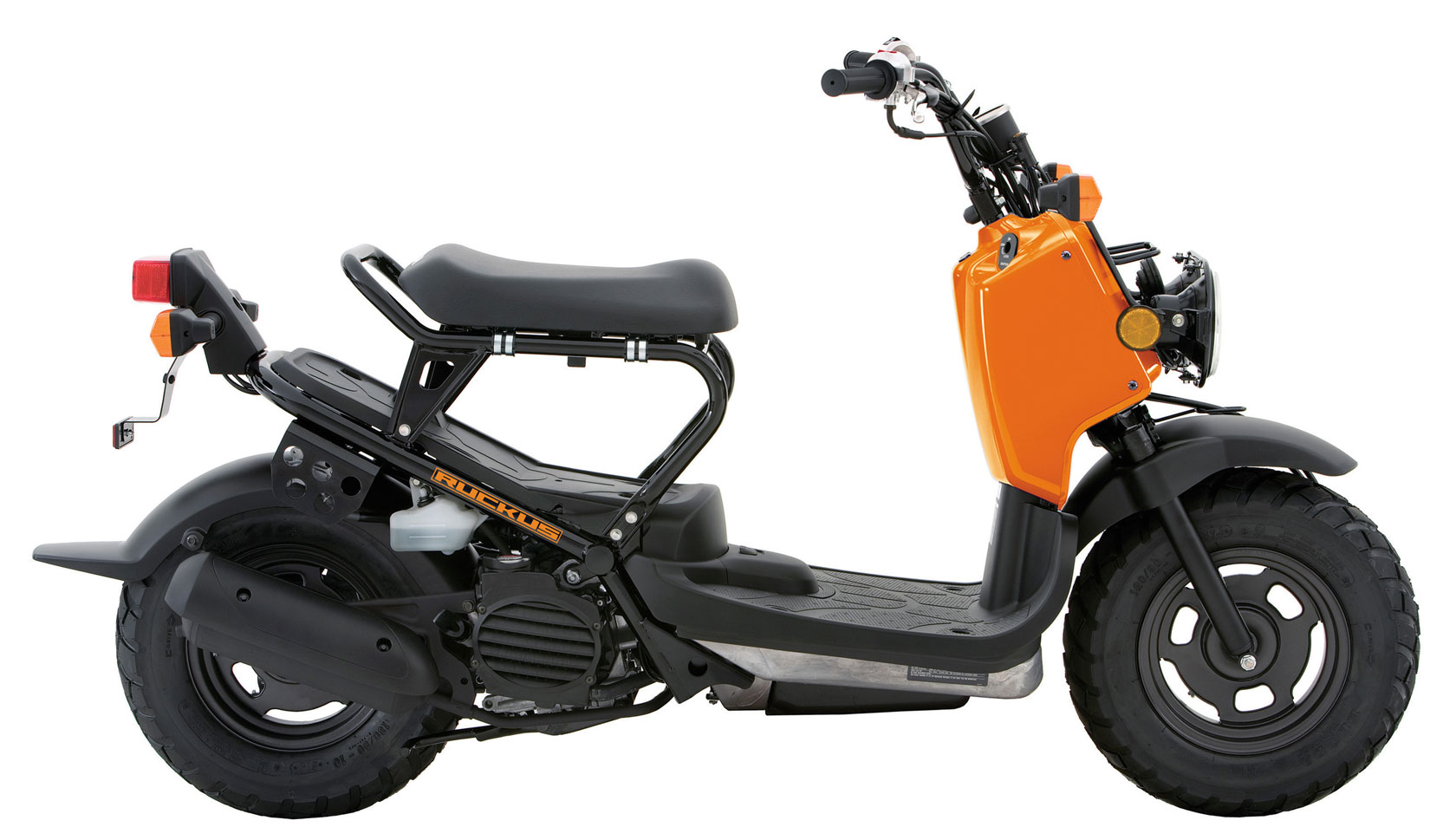
HONDA RUCKUS (NPS50)
Initially released in 2001 in Japan as the Zoomer, the NPS50 made it to the USA and Canada for the 2003 model year under the Ruckus name. After a couple slow years, the Ruckus became a strong seller for Honda and has been a popular scooter in North America since 2005. It remains on sale as of 2020.
Over its run, the rugged Ruckus received very few changes aside from color offerings. The only noteworthy changes were made for 2006 when Honda fixed a problem with the engine ventilation and raised the redline by 10%. As a result, 2006 and newer Ruckus’s are a few mph faster and they dodge a potentially catastrophic engine problem.
Motor
The Ruckus utilizes a long case version of Honda’s GET2 engine. The motor is also found in the Metropolitan, but with a shorter swing arm to suit that scooters smaller back wheel.
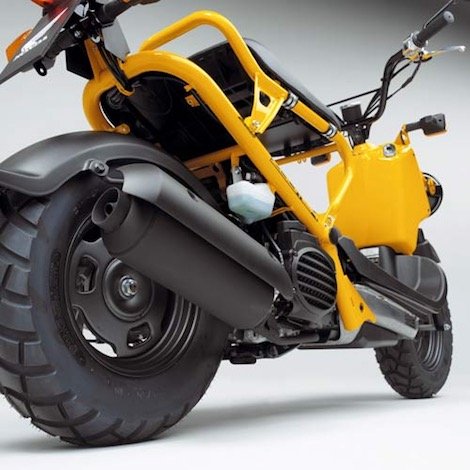 The GET2 engine is an impressive modern design. It provides ultra low emissions due to being a 4-stroke and because of the catalytic converter in the muffler (2006 and later) which most scooters don’t possess. It’s also extremely quiet and the fuel economy is amazing. You can expect an honest 85-100mpg while driving around at full throttle. It’s still not quite as good as the amazing PGM-Fi (fuel injection) and 4-valve versions of the GET2 they enjoy in Europe and elsewhere.
This motor also features a number of technological advances. This is the first scooter engine to mount a tiny radiator on the side of the motor and use a flywheel mounted fan to blow air on it. This design is very efficient, compact and elegant compared to scooters with coolant hoses running all over the place to a randomly located radiator. Secondly, the Ruckus cleverly runs electrical current in reverse through the alternator to start the motor. This spins the flywheel and cranks the engine over, while being virtually silent. The result is the traditional starter motor is eliminated saving weight, noise, cost and complexity.
For 2006 Honda addressed a long standing crankshaft bearing failure problem with the GET 2 engine by introducing a new PCV (positive crankcase ventilation) system that dramatically reduced oil contamination from gas fumes. In any cold engine, some gas fumes slip past the cold piston rings and need to be vented, but the vent system in the 2003-2005 Ruckus’s didn’t work so hot, so the fumes would stick around and degrade the oil. Honda also made a few other changes that resulted in a top speed increase from 37mph to about 41mph. These changes are mainly an increased redline (8850 vs. 8000 RPM) and a new carb needle and exhaust. Since 2006, Honda has not made any changes aside from color options and they switched the color of the blinker indicator to green from orange around 2008.
Design and Amenities
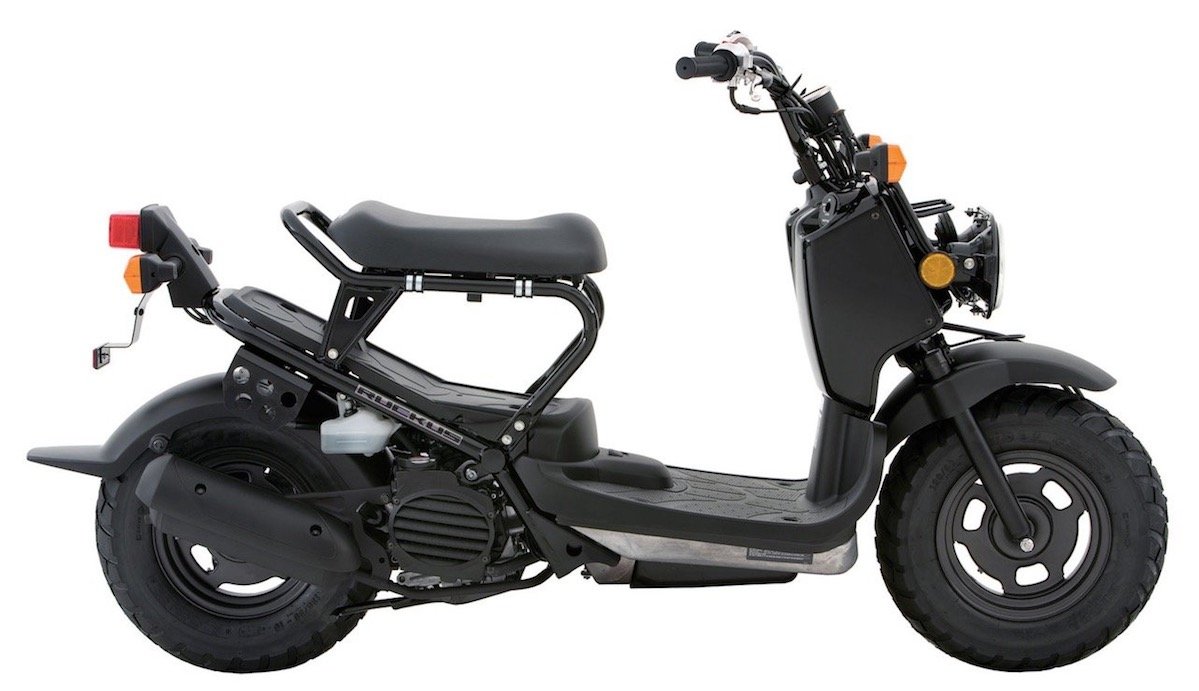
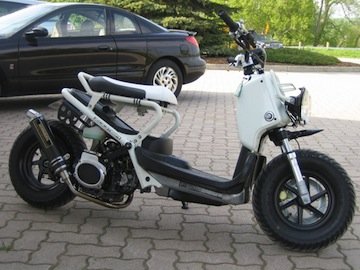 The Ruckus holds a soft spot in my heart because this is the scooter that got me into the scene. I picked up a new black 2003 Ruckus in spring 2004 and rode it everywhere. I put on about 15,000kms (9000 miles) that first year. I rode it year round for the two years which was a difficult feat in Canadian winters. Largely as a result of that winter driving, I decided to sell my slightly rusty Ruckus and get a new white 2006 one. I poured my heart into modifying that Ruckus and had just finished it when this picture (shown in white) was taken in spring, 2007. Sadly, this Ruckus was totalled a week after this picture, but I’m back on another one.
Okay enough about me! How is the rest of the scooter? Well there are a lot of things to love and a few things to complain about. The great parts of the Ruckus are its brilliantly designed engine, rugged and timeless style and Honda quality. The main downsides are the lack of the enclosed storage space and lack of options to spruce up this performance of this engine.
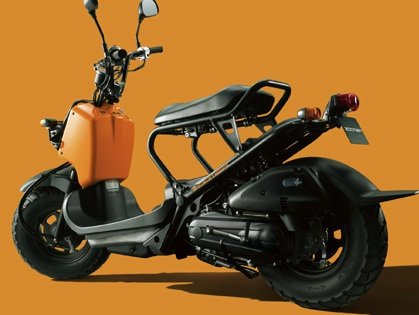
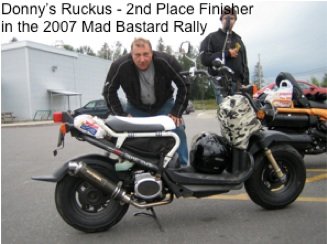 Another upside to the Ruckus is the awesome handling due to its super low center of gravity. By using a horizontal motor and by locating the fuel tank inside the floorboard instead of under the seat, Honda kept all the weight very close to the ground. Almost nothing is above the wheels. Combine that with a low seat height (28.9”) which can be made even lower with an aftermarket seat frame and you’ve got a scooter that hugs the road. This scooter also has great headlights and it has the potential to carry a lot of stuff if you are the creative sort. Mountain bikes, surf boards, lumber and bags of golf clubs can all secured to the Ruckus if you set your mind to it.
The lack of enclosed storage is also a downside though. Because the Ruckus doesn’t have any enclosed, lockable storage, you can’t store a lunch anywhere or keep a rain suit handy for that unexpected rain shower. The other big downside to the Ruckus is that its kinda slow. The 2003-2005 Ruckus’s top out around 37mph and the later model ones can do 40-42mph but it takes a while to get there. The Ruckus is not restricted like many 2-strokes. All 4-stroke 50’s are fairly slow but the Ruckus is one of the slower examples. Yamaha’s 3-valve fuel injected 4-stroke engine (found in the current Vino 50 and C3) is a bit peppier but still won’t be confused with a 2-stroke.
 The complaint here isn’t with the 4-stroke motor, as it does well enough for what it is. Rather, it would have been nice to have an engine with a removable cylinder so big bore kits that add serious power are an option. Some mild big bore pistons are available that are installed via an overbore, but you’ll still never get more displacement than 58cc unless you spend thousands on a 150cc GY6 engine swap.
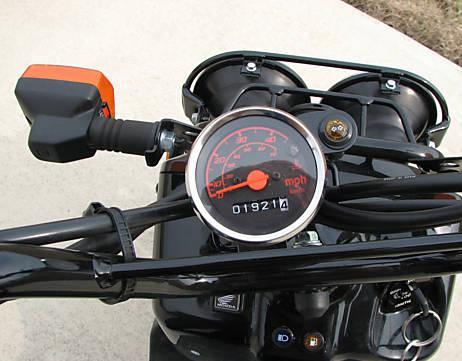
This lack of power is probably the biggest complaint in the Ruckus community. Ruckus fans have long been asking for a more powerful mid-sized (80-150cc) Ruckus but Honda’s response was the clunky Big Ruckus which was too big, expensive and it lost the charm of its smaller sibling. Other minor complaints with the Ruckus include no front disc brake, cheap suspension and the lack of a fuel gauge. The Ruckus simply has a low fuel light that comes on when you have 1 litre (0.25 gallons) left.
Discussion
Overall, the Ruckus has been successful because it’s a great looking, practical and totally unique scooter. It’s urban warrior look is awesome and timeless. Everywhere you go people ask where they can get one. The downsides to the Ruckus are all things that can be partially addressed by the vast aftermarket scene. If you’ve got deep enough pockets you can get bolt in 150cc engines, big bore kits, cams, forks, shocks, underseat storage bins, rims….pretty much anything you want. This makes owning a Ruckus a very enjoyable (and expensive) hobby. TotalRuckus.com is your gateway to this addiction.
 The most similar competitors to the Ruckus where Kymco’s Cobra Cross and Aprilia’s Rally 50, both of which were off-road inspired scooters that never caught on. Unfortunately for those scooters they were briefly sold in the USA around 2003-2004 before scooter sales really picked up in 2005. Presently, Genuine’s Roughhouse R50 and Aprilia’s new SR Motard 50 are probably the closest competitors in terms of design. Yamaha’s Zuma gets mentioned a lot as a competitor and it does appeal to a similar crowd, but it’s more of a fat tired sports scooter than an off-road inspired scoot.
Most of these other scooters mentioned are 2-strokes, which means they are faster than the Ruckus and more easily modified, but they also can’t touch the milage, longevity and emissions of the Ruckus. These other scooters also have enclosed and locking storage areas, so they certainly have their merits. The Ruckus is the kind of scooter that sells based on its unique image and quality. If you’ve fallen in love with the rugged Ruckus style, then no other scooter will do and you’ll be able to look over its shortcomings – but if you’re on the fence between the Ruckus and some of these other models then you might be better off opting for a faster scooter with some enclosed storage.
Pros:
- Unique and timeless rugged style
- Reliable (2006 – Pres.)
- Great headlights (35w x 2)
- Vibrant aftermarket parts and online forum scene
- Honest 95-100mpg
- Liquid cooled
Cons:
- Crankshaft bearing problem (2003 – 2005)
- Not easily modified for more speed.
- No enclosed storage
- No fuel gauge
- Suspension
One of the greatest things about the Ruckus is the online community and aftermarket parts scene. Check out the links below to learn more about the Ruckus and get involved.
Links:
Ruckus Service Manual – Very helpful for anyone who works on their own scooter
MotorscooterGuide Forums – Visit the forum on this site to chat about your scoot
Honda USA 2011 Ruckus Brochure (2 page pdf)
TotalRuckus – A vibrant community of Ruckus enthusiasts
PasswordJDM– The Ruckus parts goodness continues
Rucksters – Keep on shopping. The parts rock
ScooterSwapShop – Aftermarket goodies
ScooterTuning.ca – An online scooter shop with many Ruckus parts
Key Specs:
- Engine: 49cc, 2-valve, SOHC, liquid cooled single
- Years: 2003 – Present
- Power: 4.9HP @ 8000 rpm, 3.35 lbs-ft torque @ 7000 rpm
- Top speed: 37mph up to 2005, 41mph 2006+
- Fuel Tank: 5 litres / 1.3 gal
- Fuel Range: 160km / 100 miles when the light comes on, 200kms, 120 miles dry.
- Weight: 185lbs dry / 196lbs wet
- Load Capacity: 220lbs
- Weight: 185lbs (dry), 196 (wet)
- Tires: 120/90-10 (front), 130/90-10 (rear)
- Valve Gaps: Intake = 0.10mm (+/- 0.03mm), Exhaust = 0.19mm (+/- 0.03mm)
- Carburator: Keihin 18mm CV with 75 main jet, 35 slow jet (all years)
- Idle: 2000 RPM +/- 100 RPM
- Wheelbase: 49.8 inches
- Seat Height: 28.9 inches
- Wet Weight: 194 pounds
- Fuel Capacity: 5L / 1.3 gallons
Colors:
- 2003: Red, Black
- 2004: Yellow, Black, Desert Camo
- 2005: Black, Urban Camo
- 2006: White, Urban Camo
- 2007: Black, White/Urban Camo
- 2008: Black, Silver
- 2009: Red, Matte Grey Metallic
- 2010: Model year skipped
- 2011: Black, Orange/Black (USA only)
- 2012 – 2018: Black, White/Red
- 2019: Black, White/Red (USA only)
- 2020: Black, White/Red (USA only)
Timeline:
- 2001 – Introduced in Japan
- 2003 – Introduced in North America
- 2005 – Introduced in Europe with 4 valves (from 2) and Fuel Injection
- 2006 – North America Ruckus is mildly revised with a new engine ventilation system, higher redline and a few other tweaks that improved overall power and oil life.
- 2007 – North American Ruckus gets enlarged Honda logo on seatback and revised Ruckus logo’s on main frame. Japan Zoomer gets
- Deluxe Edition with new paint options and white rims and seat coverings.
- 2008 – Fuel Injection Added to Japanese models. North American models get a new colour for the turn signal indicator light.
- 2009 – Early release (July 2008) for 2009 models due to extremely high demand in North America.
- 2010 – Model year skipped in North America due to excess inventory of 2009 models resulting from recession.
- 2011 – Early release of 2011 USA models in May, 2010
- 2012 – Sept, 2011 Honda Japan announces a white/red ‘10th anniversary edition’. Two months later Honda USA confirms this version for 2012.