
HONDA ELITE 250 (CH250)
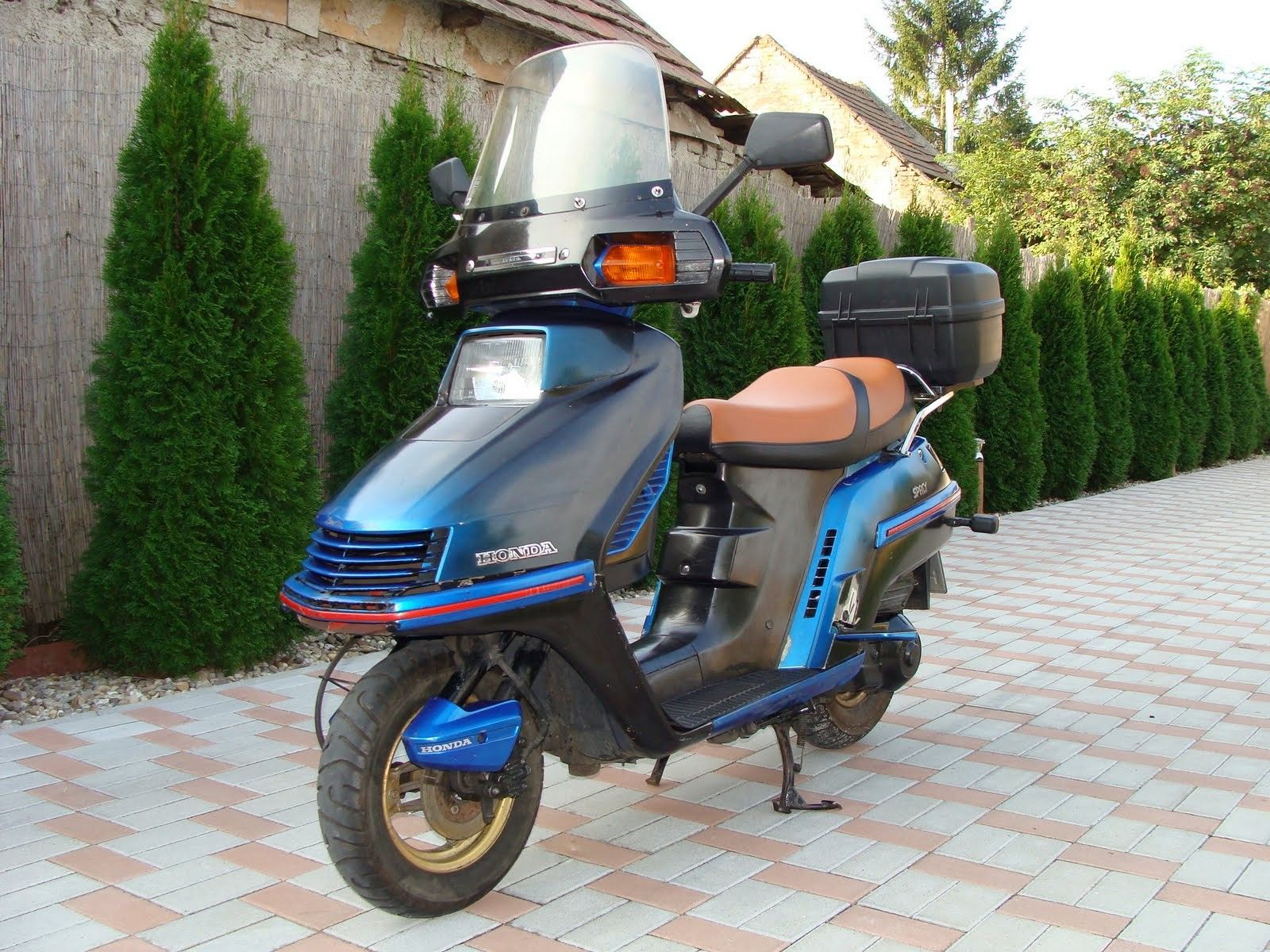
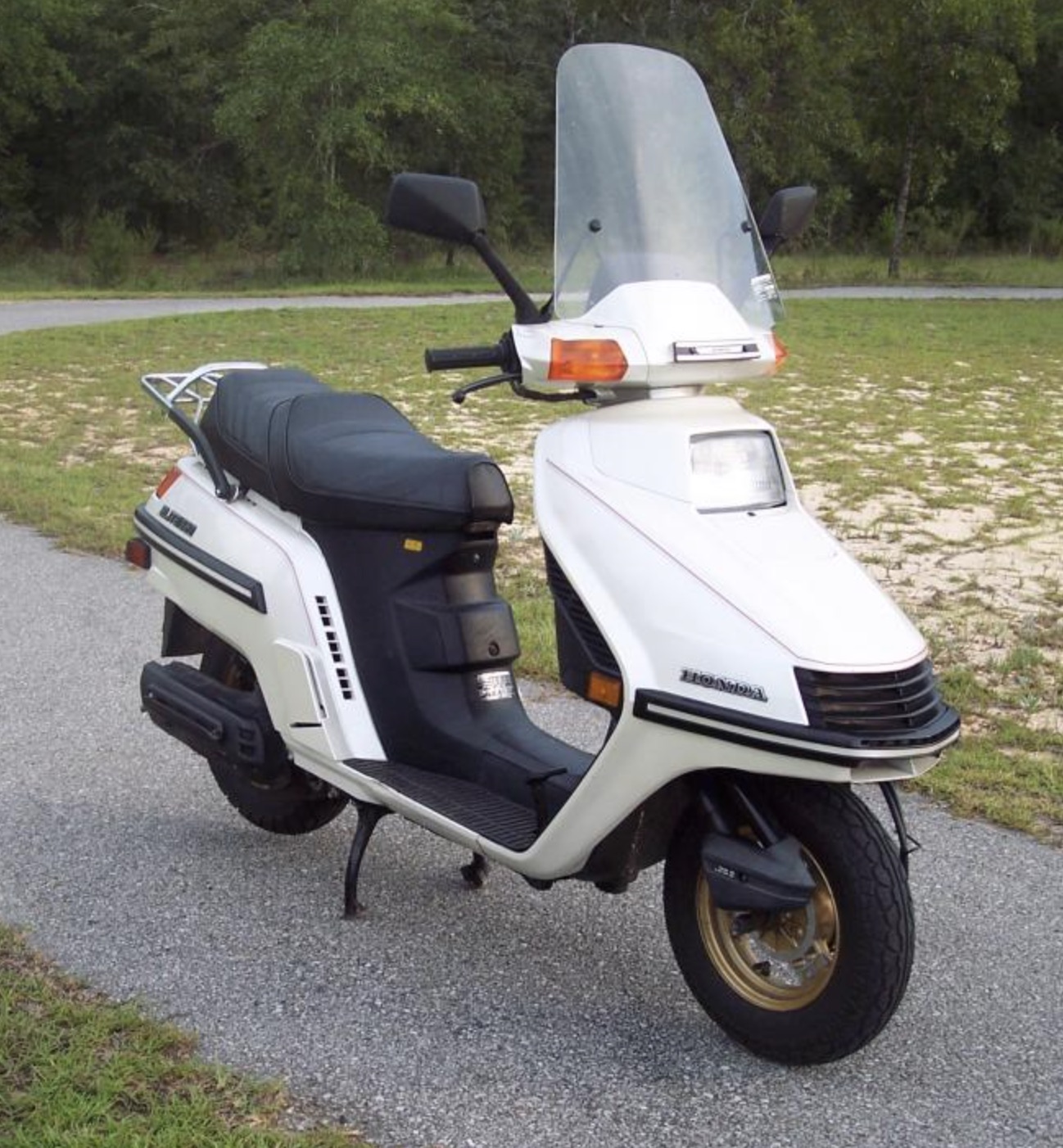 The Elite 250 (CH250) was sold from 1985 – 1990 in the USA (’85 – ’88 in Canada) and is considered by many to be the grandfather of modern maxi scooters. The Elite 250 spawned the awesome Honda Helix scooter, which was a clear inspiration of future maxi-scooters like the Suzuki Burgman, Honda Silverwing and Yamaha Morphous.
When the Elite 250 was introduced, it was the largest scooter ever to hit American shores. Previously, the largest scooters sold here were the Lambretta X200 (1966) and the Vespa Rally 200 and P200E. At 250cc, the Elite was capable of comfortably cruising at highway speeds. This new ability was half of the equation for modern maxi-scooters. The other half of the equation came in the form of Honda’s Helix, with its long, low and comfortable design.
Overseas, the Elite 250 was sold as the Spacy 250 and the Freeway in various countries.
Models
The original generation of Elite 250 was introduced for 1985 and lasted four years (1985 – 1988) before Honda released a second generation. The first generation featured styling that fit in well with the rest of Honda’s futuristic 1980’s scooters like the smaller Elite and Aero’s. This first Elite 250 was sold in many countries worldwide, including both Canada and the USA.
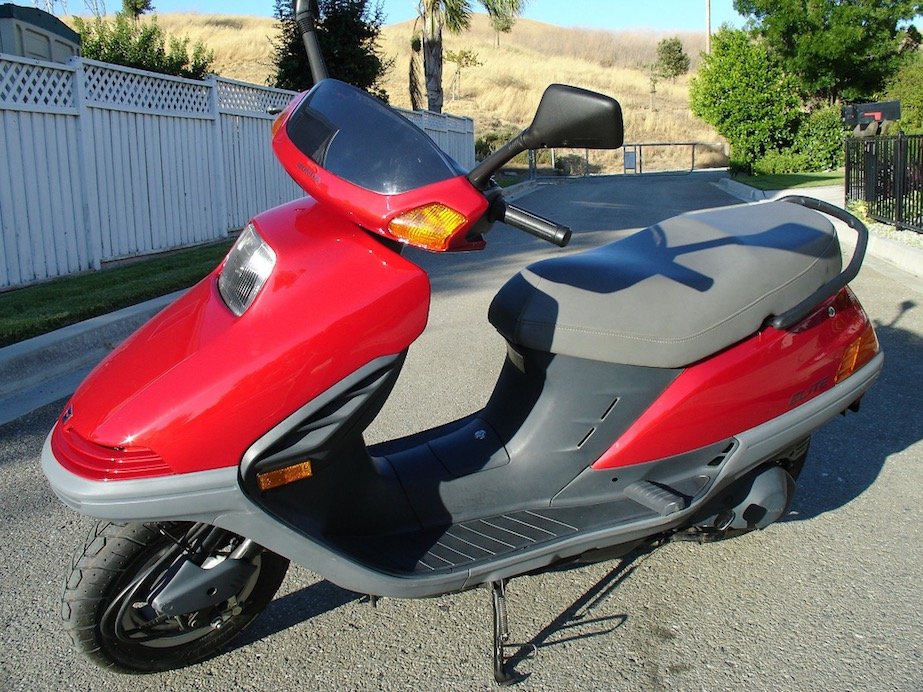
For the 1989 model year, Honda released a second generation to the USA market. Canadians weren’t so lucky as Honda opted not to import the new Elite 250, so 1988 was the last year for this scooter in Canada. The second generation of Elite 250 was virtually all new and featured all new styling and a new horizontal engine. The new styling was more rounded, much like the redesigned ’87 Elite 150. Like the new Elite 150, the new Elite 250 did not sell well. This slow sales were likely more a reflection of the overall state of the scooter market than a cool reception to this particular model. After 1987 the USA scooter market contracted and entered a stagnant period for a number of years.
Motors
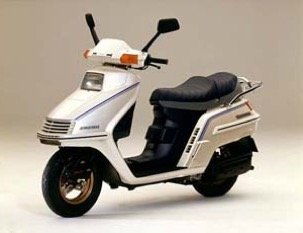 The Elite 250 was ultra-reliable and cruised comfortably at 65-70mph with a top speed around 72 – 75mph. This might not sound like a big improvement over most 150cc scooters but the Elite 250 was designed for this high speed riding so it could cruise at these speeds all day without stressing the engine and while still maintaining great fuel economy. Fuel economy is typically 55-65mpg, which is solid performance for a scooter of this size. Some 50cc 2-strokes can’t do much better.
The first Elite 250 (’85 – ’88) used a vertical motor which it shared with the Honda Helix (’86 – 2006). This motor was liquid cooled and very low stressed, so it became a stalwart example of Honda reliability. If you’re pulling one of a dusty shed after 10 years of storage then you might have some kinks to work out, but once it’s running well it should provide satisfyingly reliable performance for a vehicle approaching 30 years of age.
The second generation of Elite 250 used a new horizontal engine. This mill was also 244cc and liquid cooled, but it was an all new design with a horizontal cylinder. Interestingly, Honda did not use this new engine in the Helix, so the Helix continued to use the older 244cc vertical engine right up until its final year in 2007. Honda did make a few tweaks to this motor for 1987 including bumping the compression ratio to 10.0:1 (from 9.8).
Design and Amenities
The Elite 250 featured a nice sized glovebox for keeping your smaller items. Unfortunately, the ’85 – ’88 models lacked storage in the main body of the scooter. Underseat/trunk storage was one big advantage of Honda’s other 250 – the Helix – as that longer design allowed for better stow room. With the new 1989 model Honda was able to add a generous underseat storage area. This was made possible by the less intrusive design of the new horizontal engine. The first generation of Elite 250 used a vertical motor that occupied too much space to allow any underseat storage.
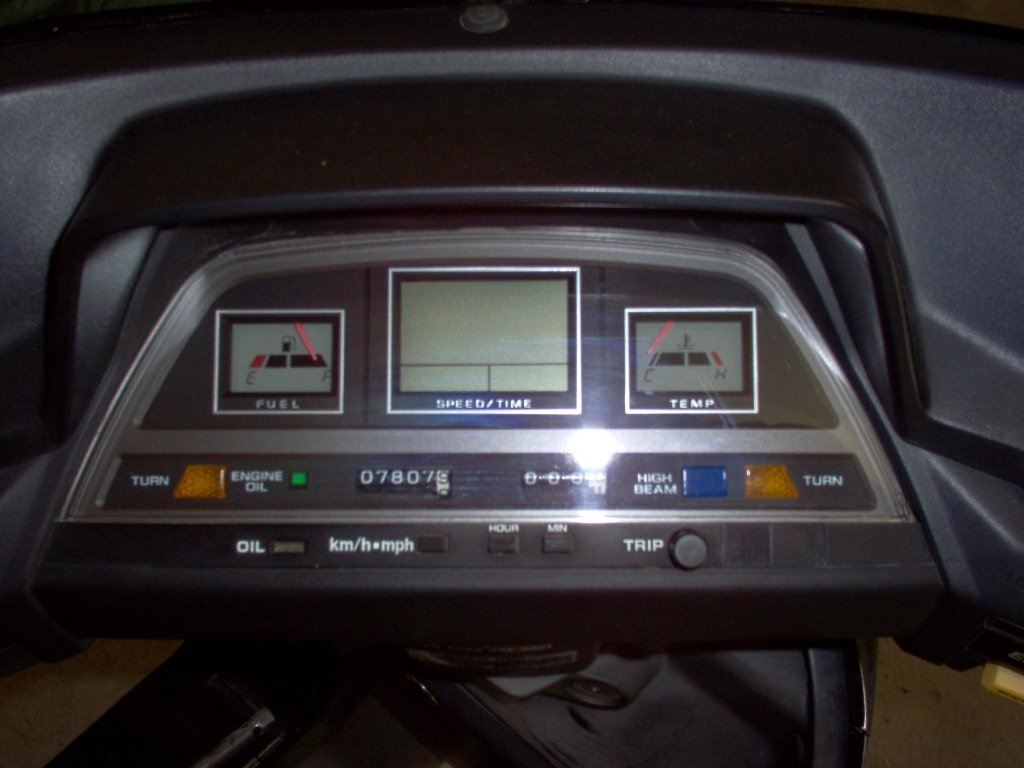
One neat aspect of the Elite 250 was the digital dash. The Elite 250 has great instrumentation with not only a speedometer and fuel gauge, but also a clock, engine temperature gauge, trip odometer and even the ability to switch between km/hr and mph for those cross border excursions. Like all of the Elite scooters, the CH250 has a neat engine oil life indicator that switches from green to red when it’s time for an oil change.
As is too often the case, scooterists in North America were offered only the base model of this scooter. Elsewhere in the world, buyers got a front disc brake while Americans and Canadians were sold examples with drum brakes front and rear. The Elite 250’s sibling, the Helix, did get a front disc brake. The rear disc brake on the Elite 250 was foot activated, which some scooterists find to be a bit awkward but it’s something most people grow accustomed to.
Discussion
As the Elite 250 closes in on its 30th anniversary, it has proven itself as a both an icon of the 80’s scooter era and a classic example of Honda reliability. While riding an older scooter might not suit everyone, The Elite 250 is one of the easier ones to live with as it’s a very simple yet rugged design that typically requires little attention once it’s running well. The typical complaints about an Elite 250 are the lackluster front drum brake, and the nervous handling at high speeds caused the small tires and short wheelbase. The Helix with its longer wheelbase, larger tires and front disc brake is the better scooter for regular high speed use.
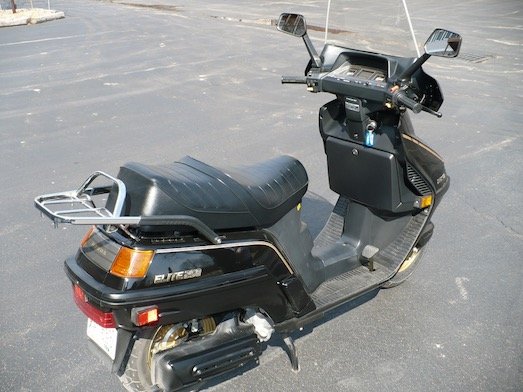 With the underseat storage area and new engine, the final Elite 250 models (’89-’90) are the best ones to own, but they don’t have the same 80’s vintage look as the earlier generation. 1983 to 1987 was the peak years of 80’s scooter popularity, so it’s hard to find good examples of the second generation Elite 250.
The primary competition at the time was Yamaha’s Riva 180 / 200 scooter, which was offered from 1983 to 1991. The Elite 250 has a history of being the more reliable scooter, but there seems to be more examples out there of the large Riva’s. Top speed and milage is about the same, as the Riva’s were quite fast for their size. The other scooter to consider from this era was Honda’s Helix. The longer and lower design of that scooter meant it had more storage for long days on the open road.
Pros:
- Highway cruising speeds
- Neat dash
- Very reliable
- Powerful
Cons:
- Some issues with exhaust manifold cracking
- Limited storage space
- Front drum brake
- High speed handling
Links:
’85 – ’88 Elite 250 Service Manual – Great tech info for your CH250
’89 Elite 250 Service Manual – Great tech info for working on your CH250
MyScoot – Honda Elite 250 Performance modifications
MotorscooterGuide Forums – Visit the forum to chat about your scoot.
Tony Sander’s Video Review – Watch this….it’s a great review.
Elite 250 Owners Group – Good info on Yahoo!
CH250.Net – Good site with write ups on maintenance and repairs.
Colors:
- 1985: Candy Orchard Red, Summer Blond
- 1986: Pearl Satin White, Pearl Gold Black
- 1987: Candy Ruby Red, Pearl Gold Black
- 1988: Myth Gray Metallic, Pearl Gold Black
- 1989: Starlight Blue Metallic
- 1990: Granite Blue Metallic
Key Specs: 1985 – 1988 Elite 250
- Engine: 244cc, liquid cooled, 2-valve, single cylinder, 4-stroke
- Compression: 9.8:1 (10.0:1 for 1987-1988)
- Bore x Stroke: 72.0 x 60.0 mm (2.8 x 2.4 inches)
- Power: 19hp @ 7500 RPM, 15.5 lbs-ft torque @ 5000 RPM
- Transmission: Honda V-matic variable ratio with automatic clutch
- Ignition: Capacitor discharge
- Starter: Electric
- Final Drive: V-Belt
- Tires: 4.00 x 10 (front and rear)
- Width: 43.3”
- Wheelbase: 49.6”
- Seat height: 28.7”
- Weight: 278-280 lbs (dry), 293-298 lbs (wet)
- Fuel Capacity: 8.3 litres / 2.1 gallons
- Wheels: 10” cast aluminum
- Front Suspension: Bottom link
- Rear Suspension: Swing unit, dual shock
- Brakes: Drum / Drum
- MSRP: $2398 (1988)